
Yolo County Criminal Court Cases
The Superior Court of California, County of Yolo handles non-traffic infractions, misdemeanors, and felonies through its Criminal Division. The public counter is at 1000 Main Street, Woodland, CA 95695, and operates Monday through Friday from 8:00 a.m. to 4:00 p.m., excluding court holidays. Criminal Division staff can be reached at (530) 406-6705. No separate Davis, Woodland, or West Sacramento municipal criminal court was identified in the official sources; local police cases that prosecutors file enter this county court.
The clerk keeps the filed court record. Anyone may review public case information such as charging documents, minutes, reporter transcripts, sentencing information, and filings, but police reports, probation reports, sealed material, and documents made confidential by law are not generally public. A court case can therefore answer what was charged and what happened judicially without providing every investigative detail.
The court’s location and contact page shows where the Criminal Division operates.
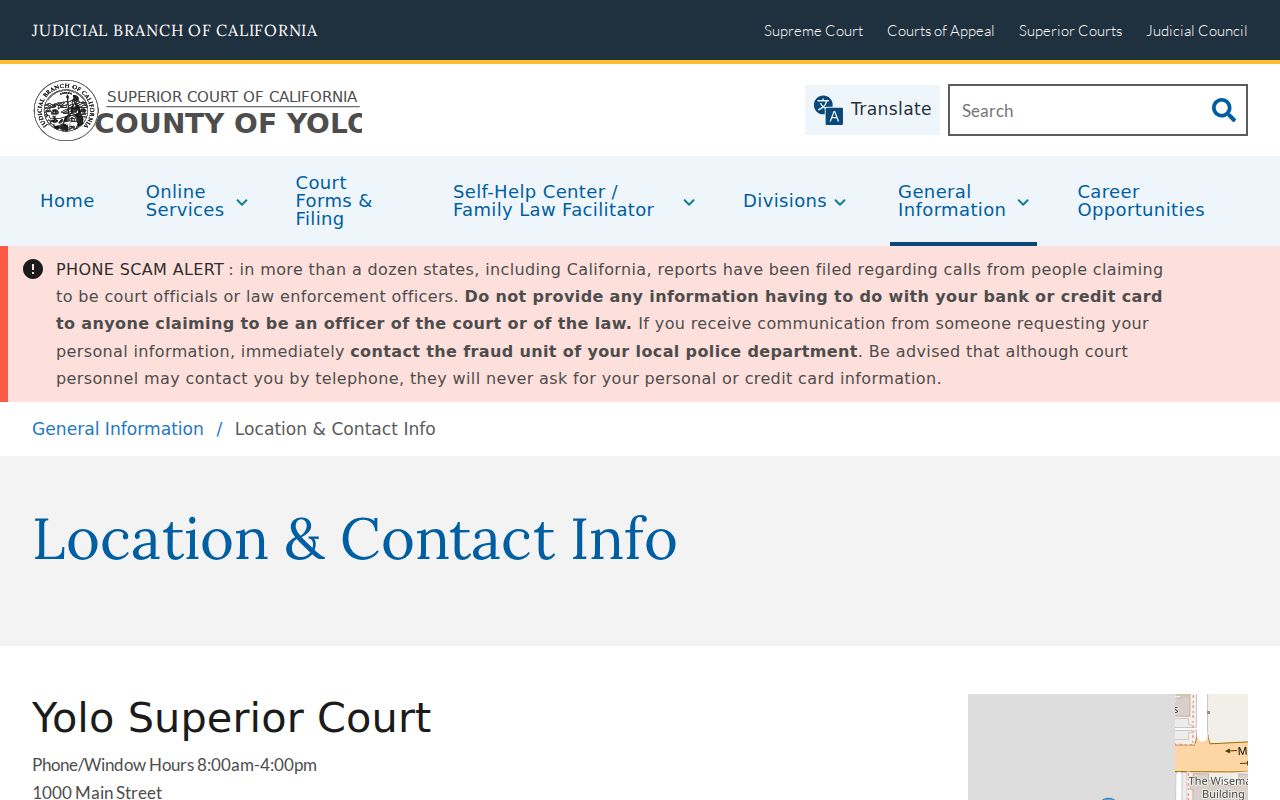
This official source is the practical check for current courthouse hours and contact details before an in-person visit.
Public Minute Orders Without Registration
The Yolo Superior Court Tyler portal offers Smart Search for court records and Search Hearings for calendars within a specified date range. Its landing page tells ordinary public users not to register unless they are approved members of the Yolo County justice-partner community. Registration is not needed for public case searching or access to available minute orders. JavaScript and cookies must be enabled, and the portal supports current and previous major browser versions.
That warning prevents a common dead end: creating an account is not a prerequisite for the public tiles. The court also disclaims warranties about the correctness, completeness, and utility of portal data. Treat a name match as a lead, compare the filing date, case type, hearings, and status, and verify identity or consequential details with the clerk.
Searching Yolo County Case Records
Use the strongest identifier available and move from the remote index to the clerk only when the question requires a document or confirmation.
- Open the Tyler portal from the court website and select Smart Search; public users do not need to register.
- Enter the case number when known. Otherwise search the person’s full name and cautiously separate same-name results.
- Review the case type, filing date, register of actions, activity descriptions, hearing date, time, department, and current status.
- Use Search Hearings for a date-range calendar check, or inspect the first-floor courthouse calendar monitor near security, where matters are sorted by last name and first name.
- For copies, visit the criminal clerk windows or send a written request with the full name, date of birth, requested documents, year of arrest or violation, telephone number, a self-addressed stamped envelope, and a check marked “not to exceed” a chosen amount.
| Portal control | Type | Required | Use |
|---|---|---|---|
| Smart Search | Text search | One identifier | Search by case number or name; case number is more precise. |
| Search Hearings | Date range | For calendar search | Find hearings during a specified range. |
| Register | Account link | No | Reserved for approved justice partners, not routine public search. |
| Sign In | Account link | No | Public search and minute-order access do not require it. |
| Reference guides | PDF links | No | Explain portal use and case-code descriptions. |
Copy Fees at the Criminal Windows
The Criminal Division’s documented copy schedule is $0.50 per page. Certification adds $40 per certified packet, and a written request requiring clerk research adds $15. A mailed request goes to Superior Court of California, County of Yolo, Criminal Division, 1000 Main Street, Woodland, CA 95695, Attention: Research RM#1511. Cash is not appropriate for a mailed request; use the court’s stated “not to exceed” check method and confirm the current amount before sending.
The official fee and bail schedules supply the current court reference point.
Consulting the official schedule matters when a request involves certification or a charge beyond ordinary page copies.
The court’s forms and filing page also collects official filing resources.
Forms help with a court filing, while a records request still needs enough identifiers for staff to locate the correct criminal case.
Inside a Yolo County Case File
The register is a chronological summary, not the complete evidentiary file. Read each entry in context and distinguish a charge from its eventual disposition.
| Case Number & Court | The court’s unique identifier, case title when public, case type, and filing date. |
|---|---|
| Charging Document | The complaint, information, or indictment describing charges formally filed. |
| Docket Entries | Minutes, motions, orders, appearances, continuances, and other register activity. |
| Hearing Dates | Scheduled date, time, and department, subject to later change. |
| Disposition & Judgment | Plea, trial result, dismissal, acquittal, conviction, or current unresolved status. |
| Sentence & Conditions | Custody, fines, probation, protective orders, and other public sentencing terms. |
A filed complaint does not prove guilt. Check later register entries for dismissal, amendment, plea, trial outcome, and judgment. If a case seems to stop midstream, ask the clerk whether later public documents exist rather than inferring the outcome.
Department 1 In-Custody Arraignments
Yolo’s local calendar practice creates a timing trap for recent arrests. In-custody arraignments are generally set for 1:30 p.m. in Department 1. The court explains that a newly arrested person may not appear on the public calendar before the first appearance because the court has not yet received and entered the case. Family members should not treat a missing morning calendar entry as proof that no hearing will occur.
The sequence can involve an arrest and Monroe Detention Center booking before the District Attorney files a complaint and the clerk creates a searchable court case. For limited case information,including fines owed, whether a warrant exists, and the court date, time, and department,call the Criminal Division at (530) 406-6705. Bail questions are directed to the Sheriff’s Department at (530) 668-5245.
How a Criminal Case Moves
A typical public record develops in stages. The prosecutor’s filing creates the court case; arraignment records the initial appearance and plea; pretrial entries show motions, negotiations, and scheduling; a plea or trial produces an outcome; disposition resolves individual charges; and sentencing records the court’s orders. Felony matters may include a preliminary hearing, locally abbreviated PX. Misdemeanors may use a pretrial conference.
Case flow: Charges Filed › Arraignment › Pretrial › Plea or Trial › Disposition › Sentencing
Not every case follows the whole line. Charges may be amended or dismissed, proceedings can be continued, and some qualifying cases may enter a collaborative path. Yolo’s Addiction Intervention Court is a multi-agency specialty court involving the Superior Court, District Attorney, Public Defender, Probation, and treatment partners; its existence explains why some registers show a route different from an ordinary plea-and-sentence sequence.
Yolo’s Warrant Surrender Calendar
If the concern is a possible warrant in one’s own case, online records are not the only channel. California Rule of Court 2.507 excludes arrest-warrant and search-warrant information from electronic calendars, indexes, and registers. Call the Criminal Division at (530) 406-6705 for the limited warrant information clerks may provide. The court FAQ describes a one-time misdemeanor “warrant surrender” calendar request for certain matters. Eligibility and scheduling should be confirmed directly with court staff.
A warrant entry is a court order, not a conviction. The register may show why it issued,such as a missed appearance,but its current status needs confirmation. Do not rely on an old docket snapshot when deciding whether to appear. If bail information is needed after confirming a criminal case or warrant, use the Sheriff’s Department number supplied by the court.
Case Record Access & Restrictions
California court records are generally open unless sealed or confidential, but remote access is narrower than access at the courthouse. Rule of Court 2.503 governs electronic availability.
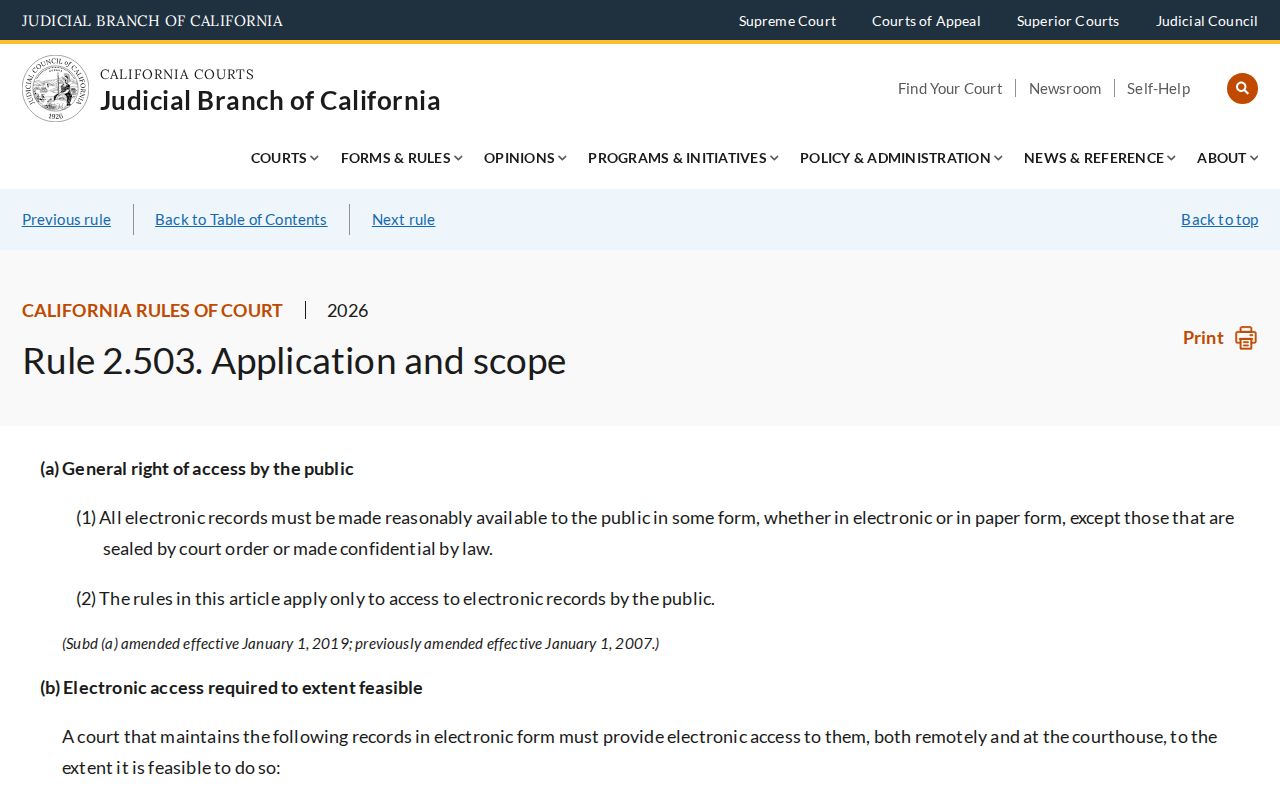
The rule helps explain why a portal result and the reviewable clerk file are not identical.
Rule 2.507 requires minimum calendar, index, and register information while excluding Social Security numbers, financial details, arrest and search warrant information, victim and witness information, ethnicity, and age.
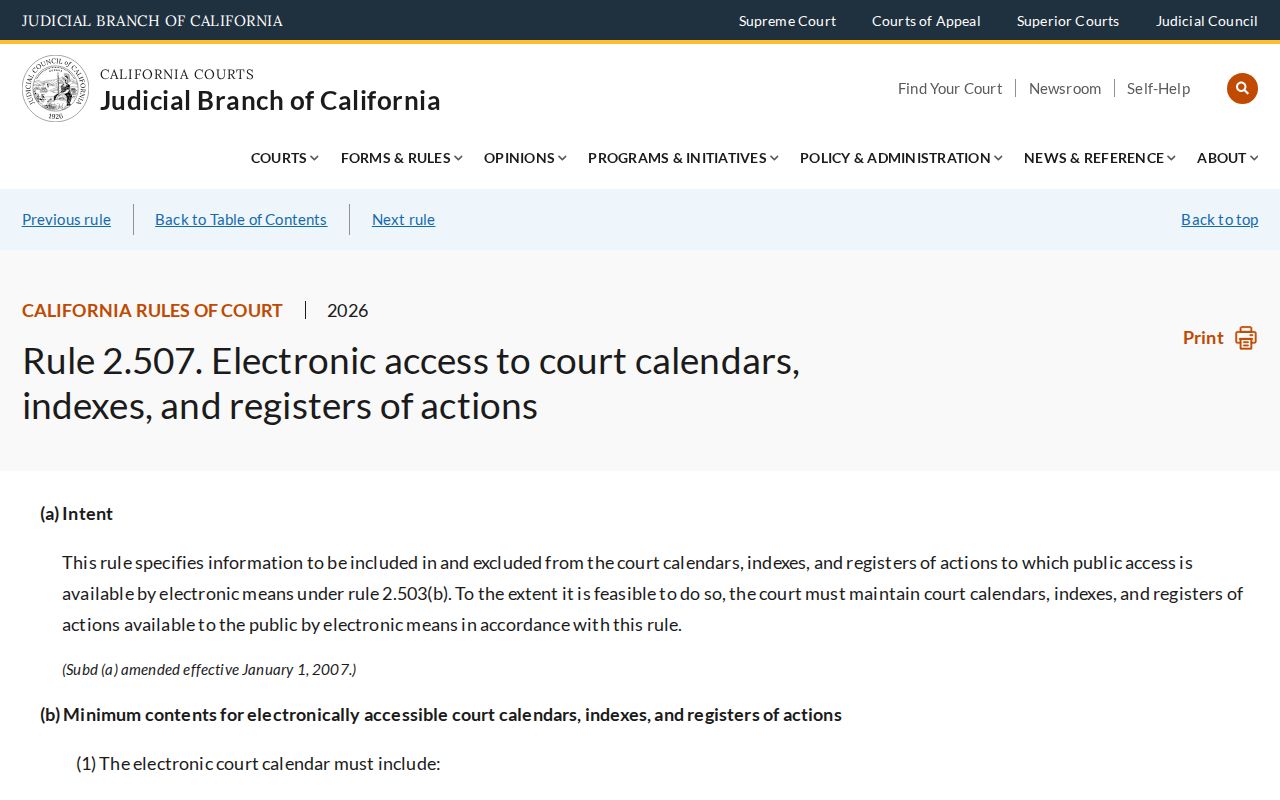
Those exclusions are intentional protections, so their absence from Smart Search does not establish that the underlying event never occurred.
Juvenile matters, sealed records, police reports, probation reports, and legally confidential documents require different authority or remain unavailable. A sheriff or police report must be requested from the agency that created it under the California Public Records Act, subject to exemptions and redaction. A California DOJ rap sheet is another system entirely: the person whose record it is uses fingerprints for Record Review; California offers no general public DOJ name search.
Dismissal Does Not Erase the File
California Penal Code 1203.4 may allow eligible people to withdraw a plea or set aside a verdict and have the accusation dismissed after qualifying probation circumstances. Yolo’s court materials state that filing a petition under section 1203.4 or 1203.4a has no court filing fee. Relief has limits and does not automatically restore firearm rights, end an unexpired protective order, or eliminate every disclosure duty.
The official text of Penal Code 1203.4 provides the controlling requirements.
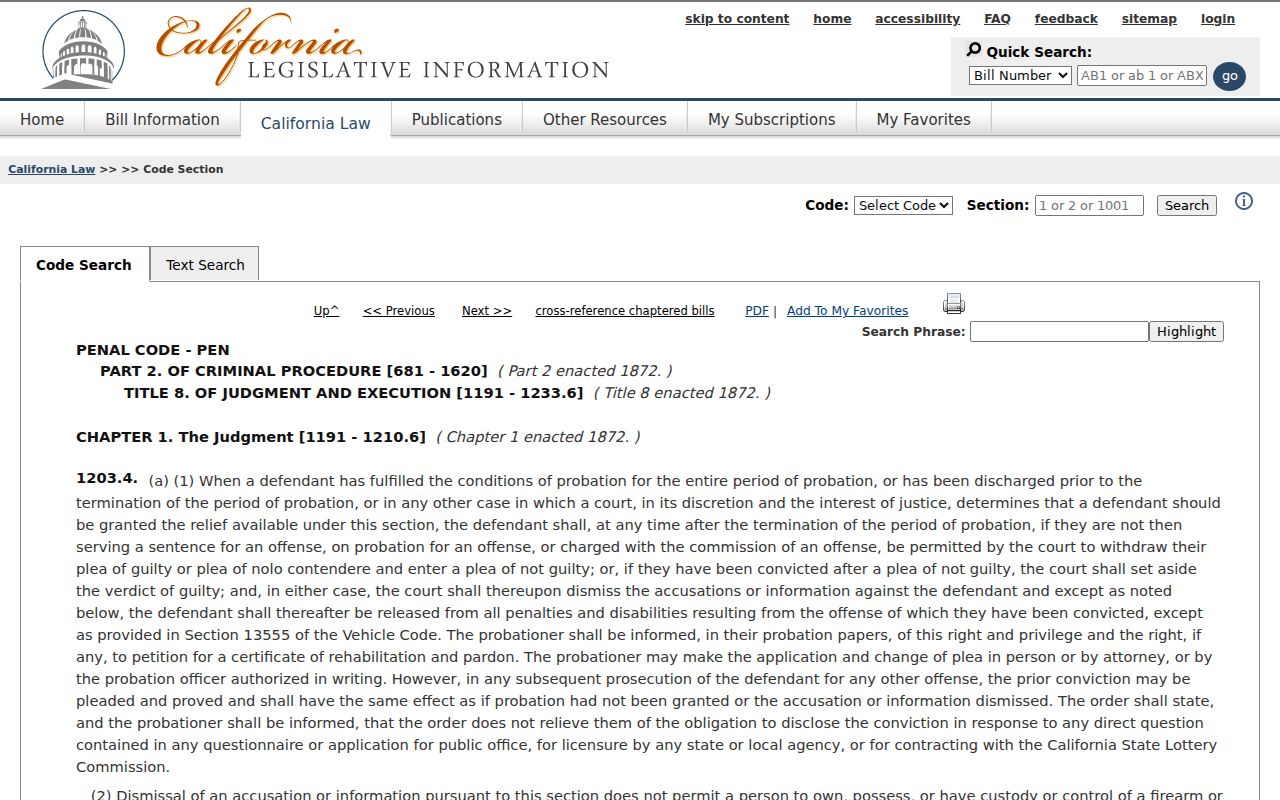
Even after an order, the historical court case can carry a dismissal or relief notation rather than disappearing as though it never existed. Verify both the Yolo disposition and, when appropriate, one’s own DOJ Record Review response.